What Is HEMA in Nail Polish? Allergy Risk and HEMA-Free Labels
HEMA is short for 2-hydroxyethyl methacrylate, a reactive methacrylate monomer used in some gel and artificial-nail product systems. Not every gel product contains HEMA, so the ingredient list matters.
The main concern is repeated or accidental contact between uncured product and the surrounding skin. This guide explains HEMA labels, HEMA-free claims, European professional-use rules, and what to do if you notice a possible reaction.
What is HEMA in nail polish?
HEMA is one member of the wider methacrylate family used in some lamp-cured nail products. It helps form part of the hardened polymer system after correct curing.
The full ingredient name
HEMA stands for 2-hydroxyethyl methacrylate. Depending on the market and label format, the ingredient may appear as HEMA or by its full chemical name.
A reactive monomer
Before curing, HEMA is part of the reactive liquid product. Correct curing changes the product into a hardened polymer system, but application and lamp compatibility still matter.
Not every gel contains HEMA
Some gel products contain HEMA and others use different methacrylates. Read the full ingredient list instead of assuming that every gel or builder product has the same formula.
Why skin contact matters
European safety reviewers concluded that contact with the skin beside the nail can increase sensitisation risk, especially when products are misused or applied without enough precision.
Keep uncured gel on the nail plate
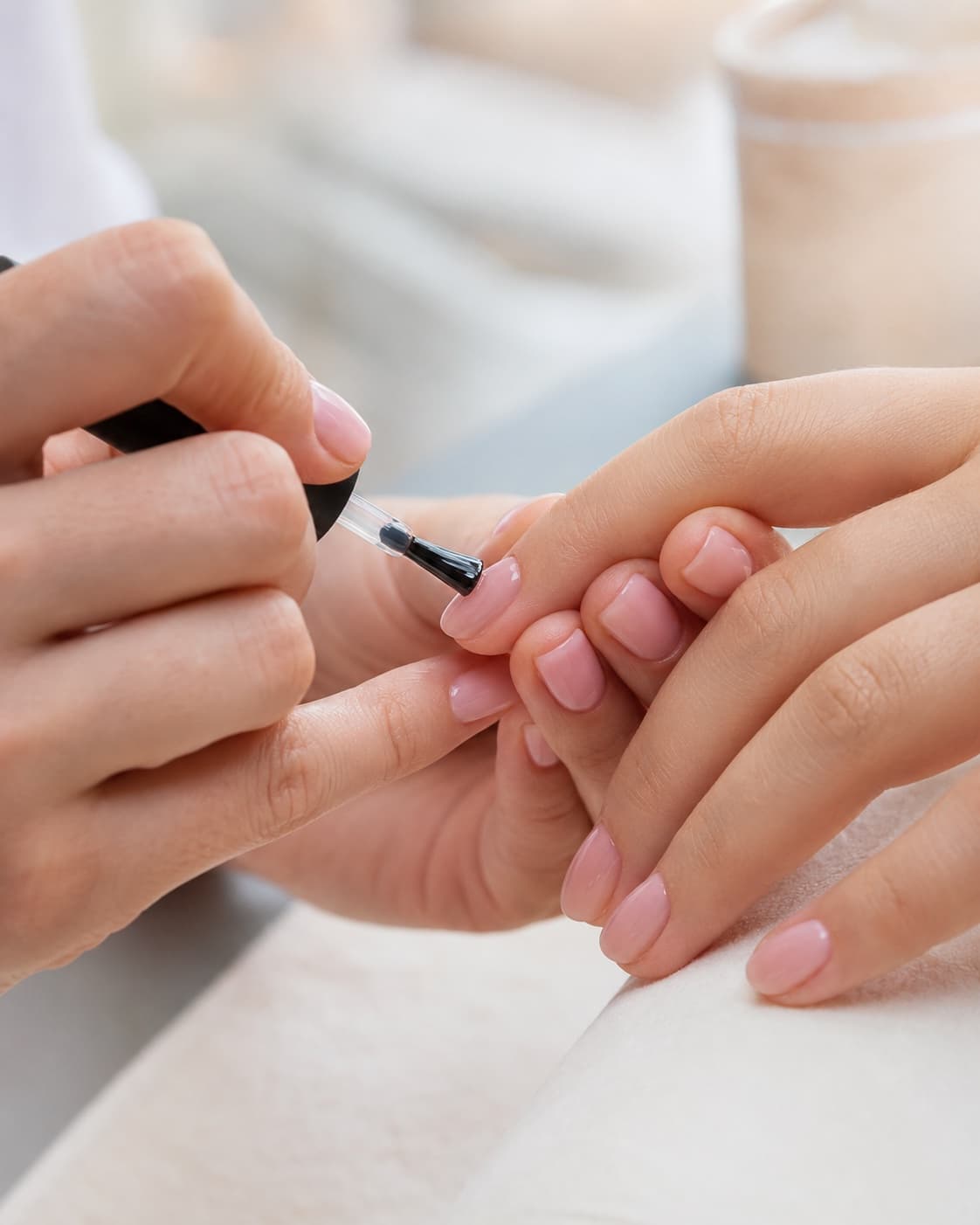
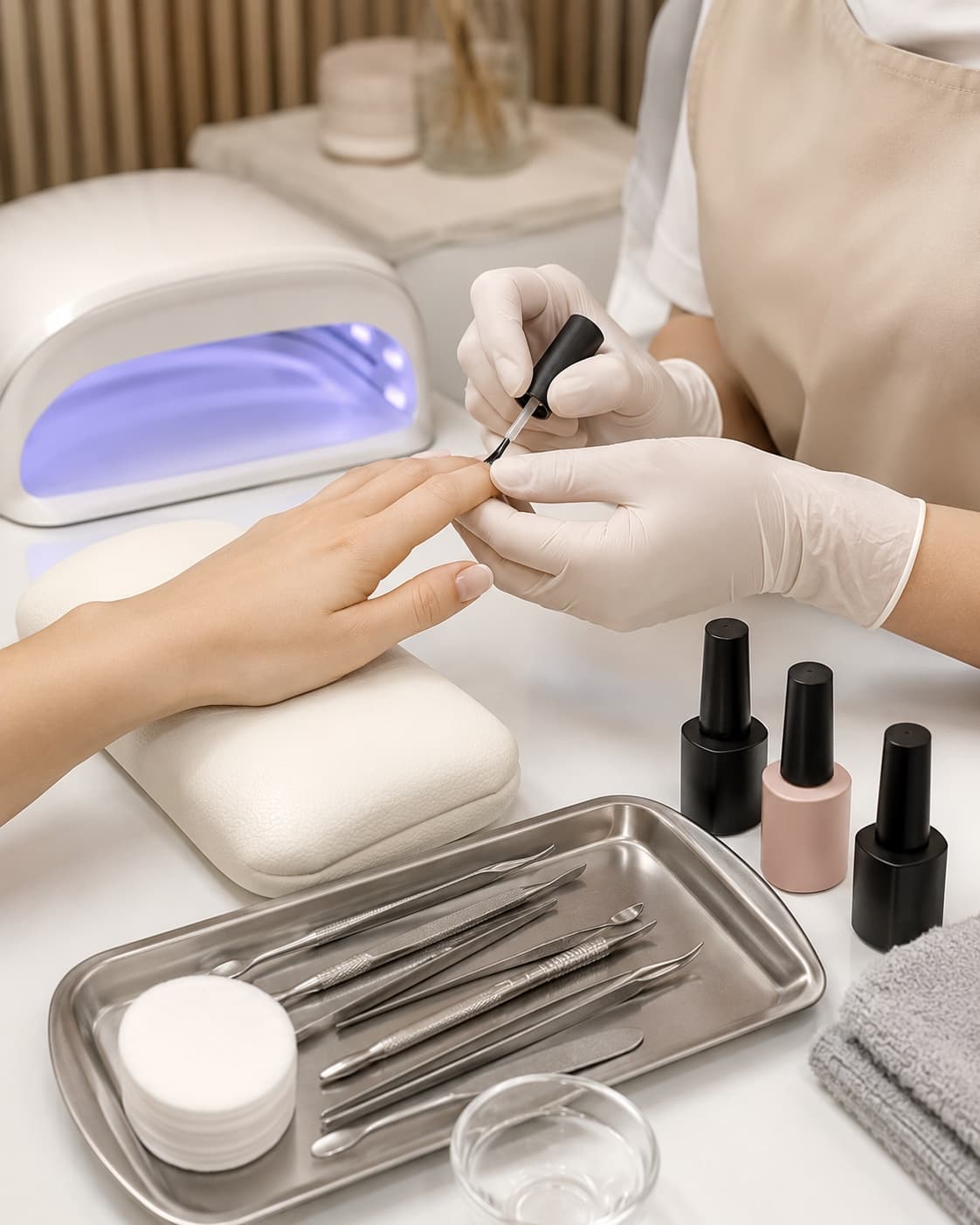
Apply the product without flooding the cuticle or sidewalls. Follow the brand's cleanup instructions before curing if uncured gel touches the surrounding skin.
Repeated exposure can matter
Sensitisation can develop after exposure over time. Someone who becomes allergic may react to later contact with the same or related methacrylate ingredients.
Correct curing is part of the system
Use the lamp and cure time specified by the manufacturer. An incompatible lamp or incorrect layer thickness may leave the product inadequately cured.
What does HEMA-free gel polish mean?
HEMA-free normally means that HEMA is not listed as an ingredient. It does not automatically mean that the product contains no other methacrylates or cannot cause a reaction.
HEMA-free is ingredient-specific
The claim refers to HEMA itself. Check whether the brand provides a complete ingredient list and whether other acrylate or methacrylate ingredients are present.
HEMA-free does not mean allergy-free
A product without HEMA can still contain other ingredients capable of causing irritation or allergic contact dermatitis in a susceptible person.
Avoid self-testing on the skin
Do not place uncured gel on the skin to test whether you react. Product testing and allergy diagnosis should not be improvised at home.
HEMA vs Di-HEMA and other methacrylates
HEMA and Di-HEMA Trimethylhexyl Dicarbamate are separate ingredients. A label that excludes one does not automatically exclude the other.
HEMA
HEMA is 2-hydroxyethyl methacrylate. It is one of several methacrylate monomers that may appear in artificial-nail or gel-product systems.
Di-HEMA TMHDC
Di-HEMA Trimethylhexyl Dicarbamate is a different ingredient with a different chemical name. In the European Union, it is regulated alongside HEMA in nail products.
Other acrylates and methacrylates
Gel, builder, acrylic, adhesive, and enhancement systems can contain different related ingredients. A dermatologist may need to test more than one substance when investigating contact allergy.
How to read a nail-product label
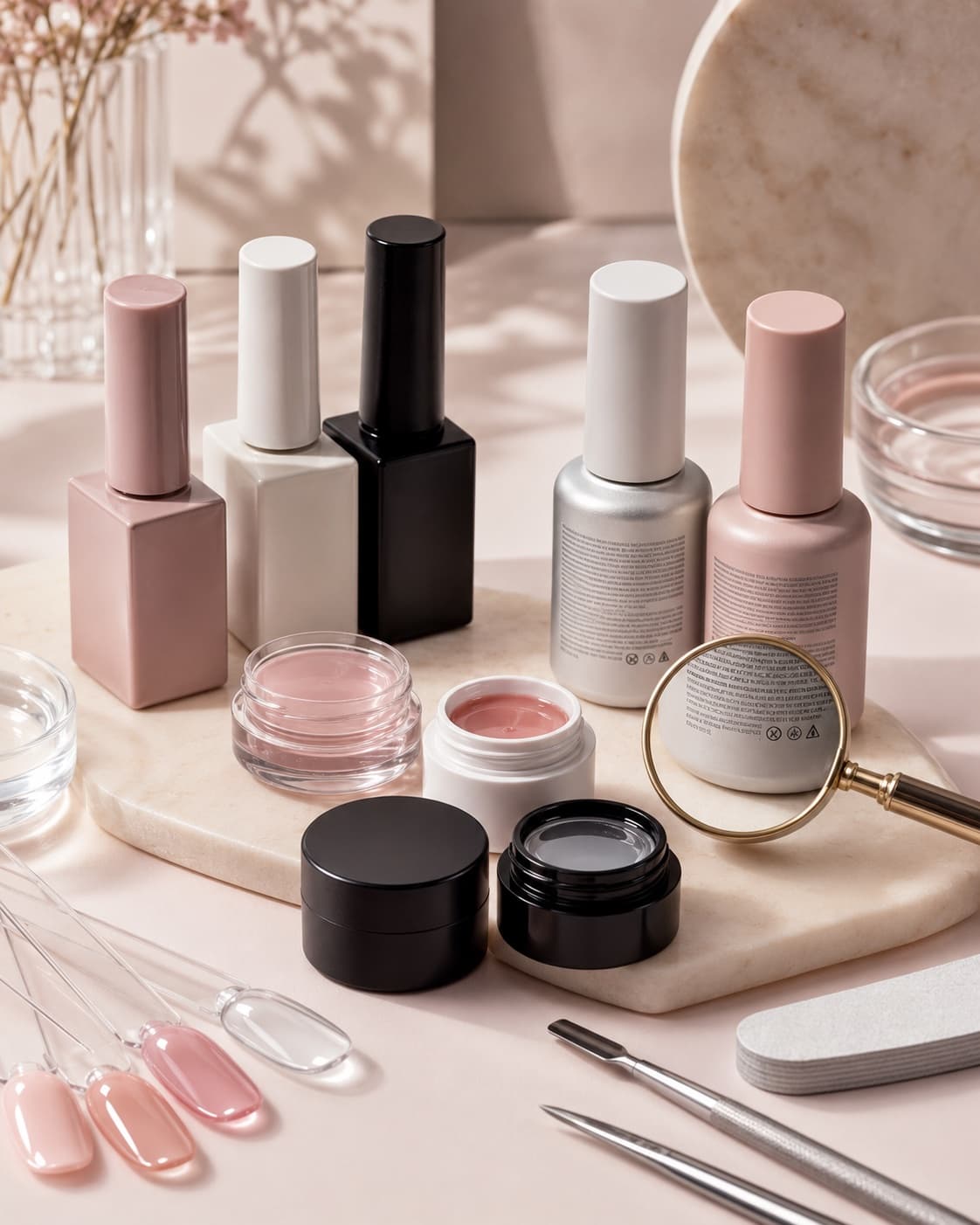
Ingredient lists, warning statements, professional-use restrictions, lamp directions, and cure times should be reviewed together.
Check the ingredient list
Look for HEMA, 2-hydroxyethyl methacrylate, Di-HEMA Trimethylhexyl Dicarbamate, and any other ingredients you have been advised to avoid.
Read the warnings
In the European Union, nail products containing HEMA or Di-HEMA TMHDC must be marked for professional use only and warn that they can cause an allergic reaction.
Rules differ by market
The European professional-use restriction is not a worldwide ban. Regulations, label formats, and product availability differ between countries.
What to do if you notice a possible reaction
A website cannot diagnose a nail-product allergy. Stop using the suspected product and seek appropriate medical advice if symptoms persist or spread.
Do not cover the reaction
Avoid applying another gel, builder, adhesive, or enhancement over irritated, swollen, painful, or visibly changed skin and nails.
Keep product information
Save the product name, ingredient list, lamp details, and service date. This information may help a healthcare professional investigate the reaction.
Ask about patch testing
A dermatologist can use patch testing to identify contact allergens. Patch testing is different from food-allergy or immediate allergy testing.
FAQs
What is HEMA in nail polish?
HEMA is 2-hydroxyethyl methacrylate, a reactive methacrylate monomer used in some gel and artificial-nail product systems.
Why is HEMA used in gel polish?
HEMA can form part of the reactive system that hardens during curing. The exact function and concentration depend on the manufacturer's formula.
What does HEMA-free gel polish mean?
HEMA-free generally means HEMA is not listed as an ingredient. It does not prove that the product is free from every acrylate or methacrylate.
Is HEMA-free gel polish allergy-free?
No. Other ingredients can still cause irritation or allergic contact dermatitis, and a person already sensitised to methacrylates may need specialist advice about what to avoid.
Is HEMA banned in nail polish?
HEMA is not universally banned. In the European Union, nail products containing HEMA or Di-HEMA TMHDC are restricted to professional use and must carry an allergic-reaction warning.
How can I tell if nail polish contains HEMA?
Read the ingredient list for HEMA or 2-hydroxyethyl methacrylate. Check the complete label rather than relying only on front-of-package claims.
What should I do if I react to gel nail polish?
Stop using the suspected product, avoid covering the affected area with another enhancement, and seek medical advice. A dermatologist may recommend patch testing.
Product and safety references
Use compatible products as directed by their manufacturer. For general nail-product and gel-manicure safety guidance, review these independent sources.
- Scientific opinion on HEMA and Di-HEMA safety — European Commission Scientific Committee on Consumer Safety →
- EU professional-use and warning requirements — EUR-Lex →
- Methacrylate nail-product safety guidance — U.S. Food and Drug Administration →
- Dermatologist warning about methacrylate nail allergy — British Association of Dermatologists →
- How dermatology patch testing works — British Association of Dermatologists →
More looks to save
Use these extra references to compare color, shape, and finish before you choose the version to show your nail tech.
Closest matches to compare
Ranked by shared shape, colour, finish, occasion and the preferences stored privately on this device.