Simple Nail Designs: 12 Clean, Easy Ideas
Simple nail designs work because they are easy to execute and easy to wear. A clean, minimal set built around one good idea also reads clearly in close-up photos.
This 2026 simple nail ideas guide compares 12 designs for short and medium nails. Several are beginner-friendly at home with regular polish and basic tools; the finer French and line work may be easier with guides or at a salon.
Beginner dot designs
Tool: a small dotting tool or rounded bobby-pin tip. Difficulty: beginner. Let the base color layer dry fully before placing dots so the layers stay distinct.
Tiny white dots on nude
Place three small white dots near the tip of a dry nude base with a dotting tool or rounded bobby-pin tip, then finish according to the polish label.
Black dot accent
Place one black dot at the center or cuticle edge of each nail. Keeping the dot position consistent makes this beginner design look deliberate.
Pastel dot cluster
Build a small cluster of four or five pastel dots in one corner. Let overlapping colors dry between placements to keep the cluster clean.
Line and stripe details
Tool: a fine liner brush or removable striping guide. Difficulty: beginner with a guide, intermediate freehand. Work over a dry color layer and lift a temporary guide while the painted stripe is still wet; decorative striping tape stays on the nail and should be sealed according to its directions.
Horizontal stripe near the tip
Use striping tape or a liner brush for one thin gold or white line below the tip. It suggests a French design without requiring a curved smile line.
Vertical stripe on accent nail
Add one contrasting vertical line to a single accent nail. Start with the non-dominant hand and use tape if a centered freehand line feels difficult.
Diagonal line corner detail
Draw or tape a short diagonal from one corner inward. The straight edge is easiest to read on square or coffin-shaped nails.
Micro French and tip ideas
Tool: French guides or a fine liner brush. Difficulty: beginner with guides, intermediate freehand. Keep the line proportional to the available tip area.
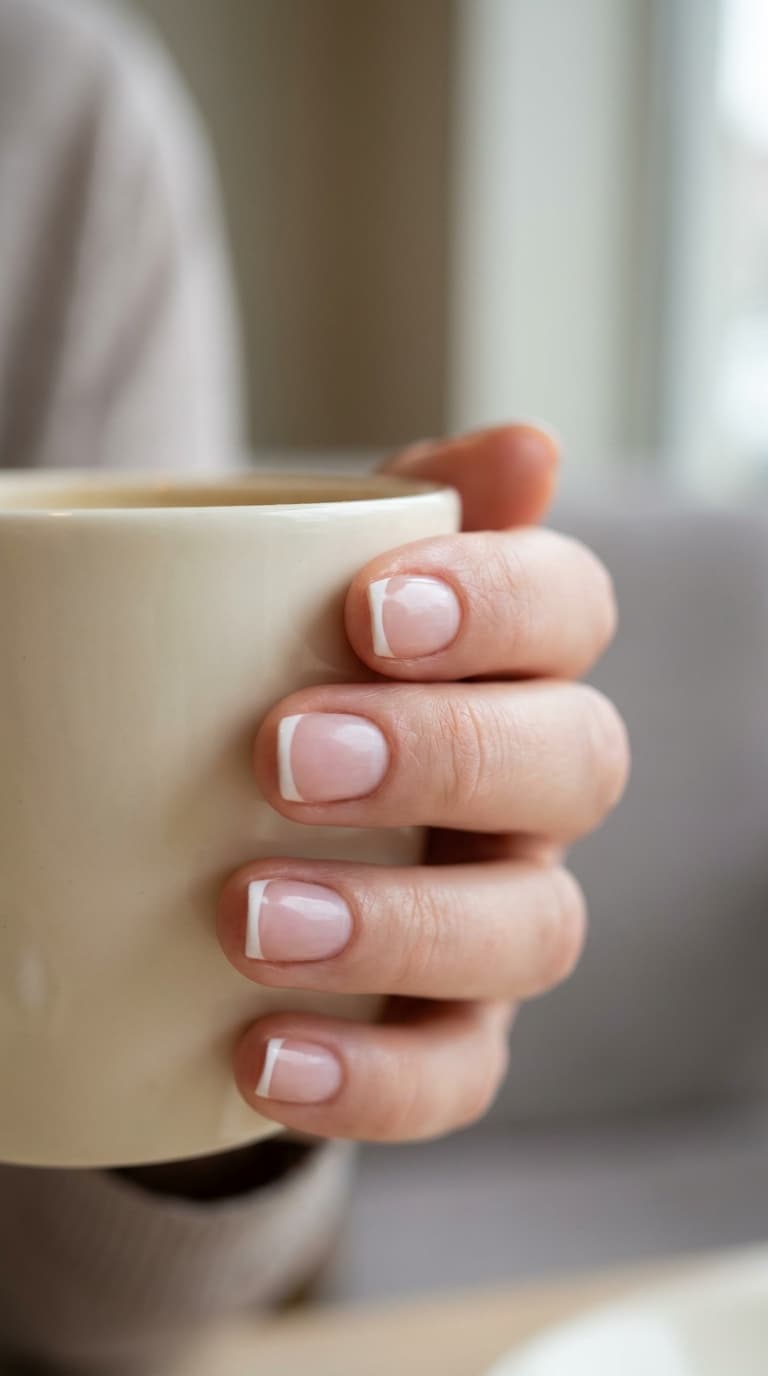
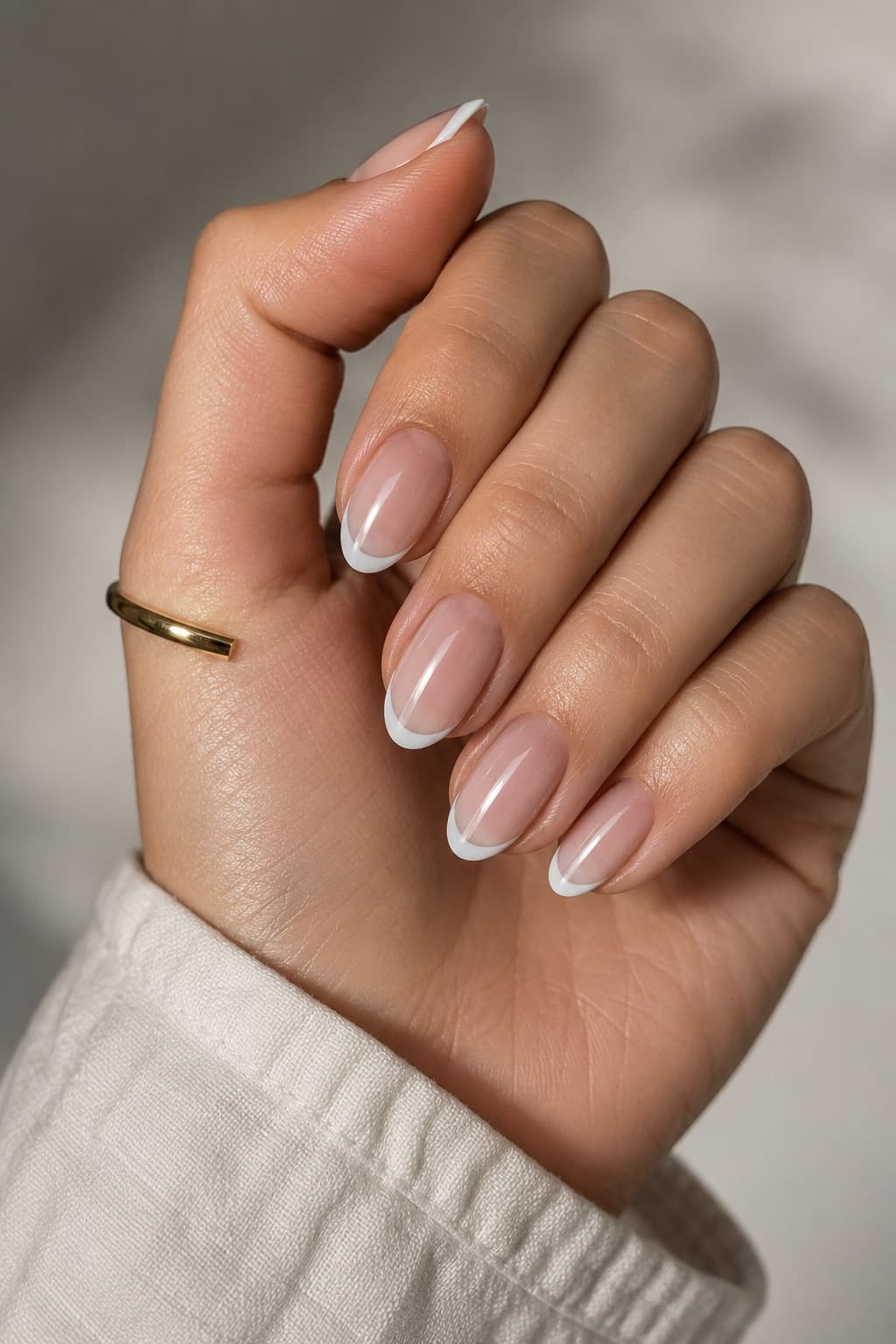
Classic micro French
Use a guide or fine brush for a very thin white tip on a dry sheer base. Match the curve to each nail rather than forcing the same width across all ten.
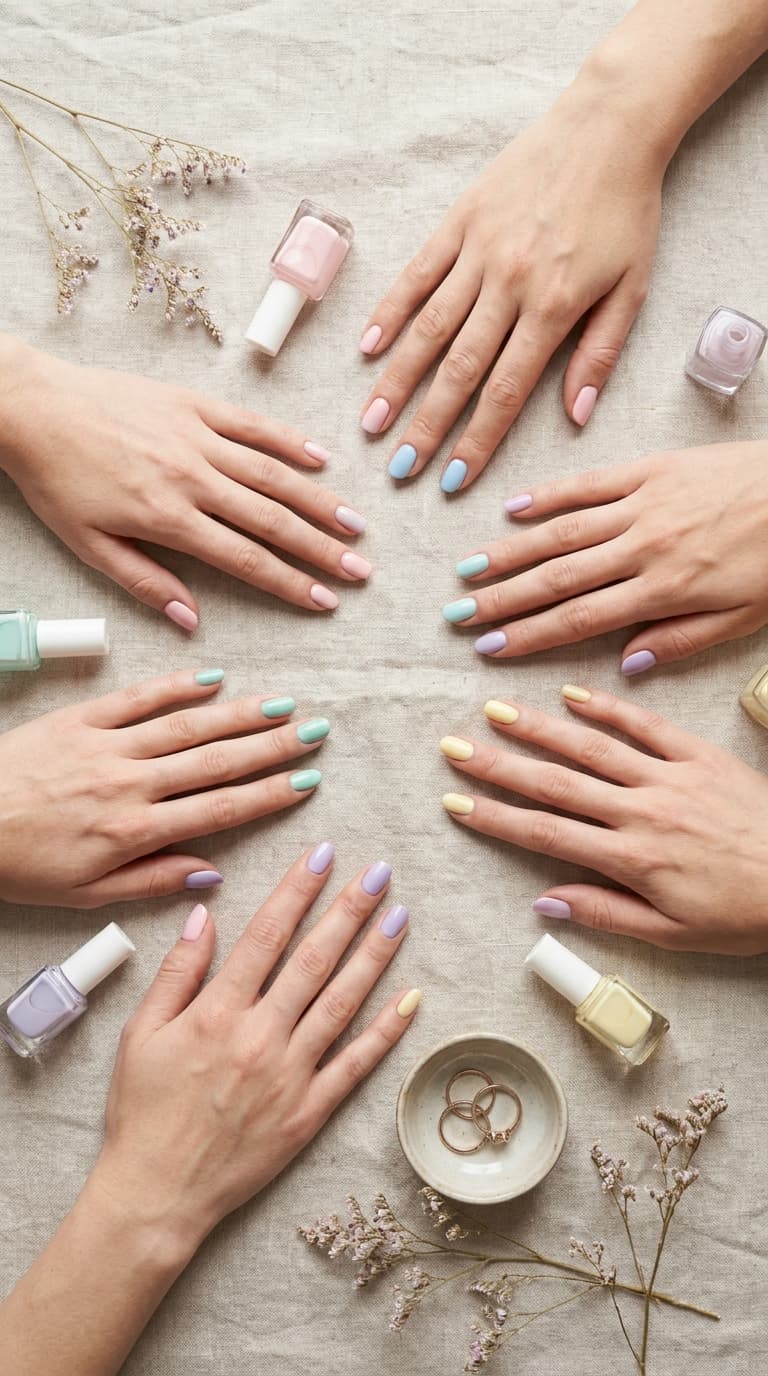
Colored micro French
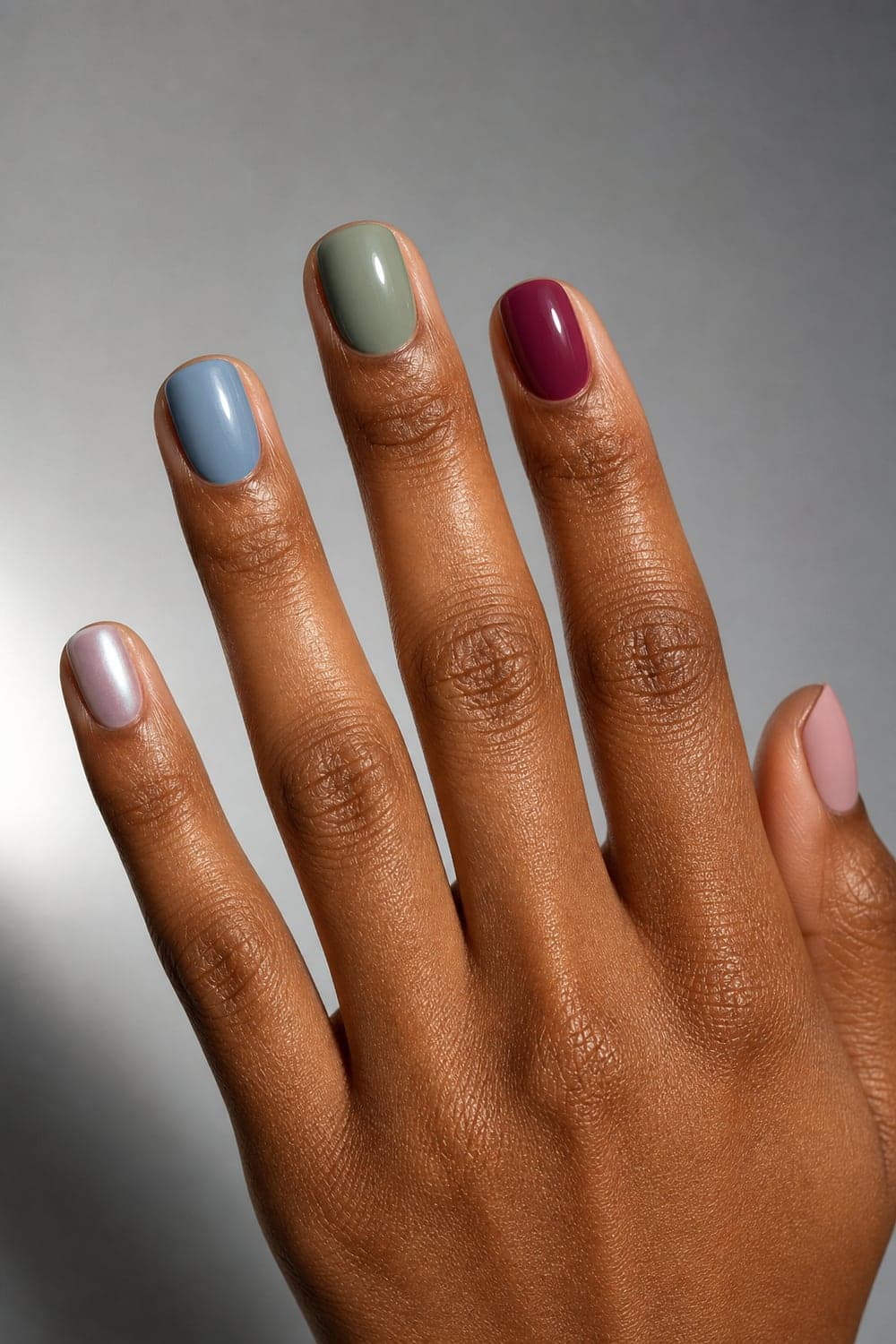
Swap white for lavender, mint, or dusty rose. The same technique but with a seasonal color makes it instantly fresh.
Reverse French at cuticle
Paint a thin arc near, not on, the cuticle in white or gold. This is the most precision-dependent option in the guide and may be easier with a liner brush at the salon.
Single color with texture
Tool: one compatible effect or top coat. Difficulty: beginner. Follow the product label for drying, curing, layer compatibility, and whether another top coat is recommended.
Matte topcoat over one color
Apply a compatible matte top coat after the color layer has dried or cured as directed. Deep colors and nudes make the finish change especially easy to see.
Glitter on one accent nail
Apply a fine glitter polish on one nail and keep the rest plain. The contrast is the design.
Glazed milk nail
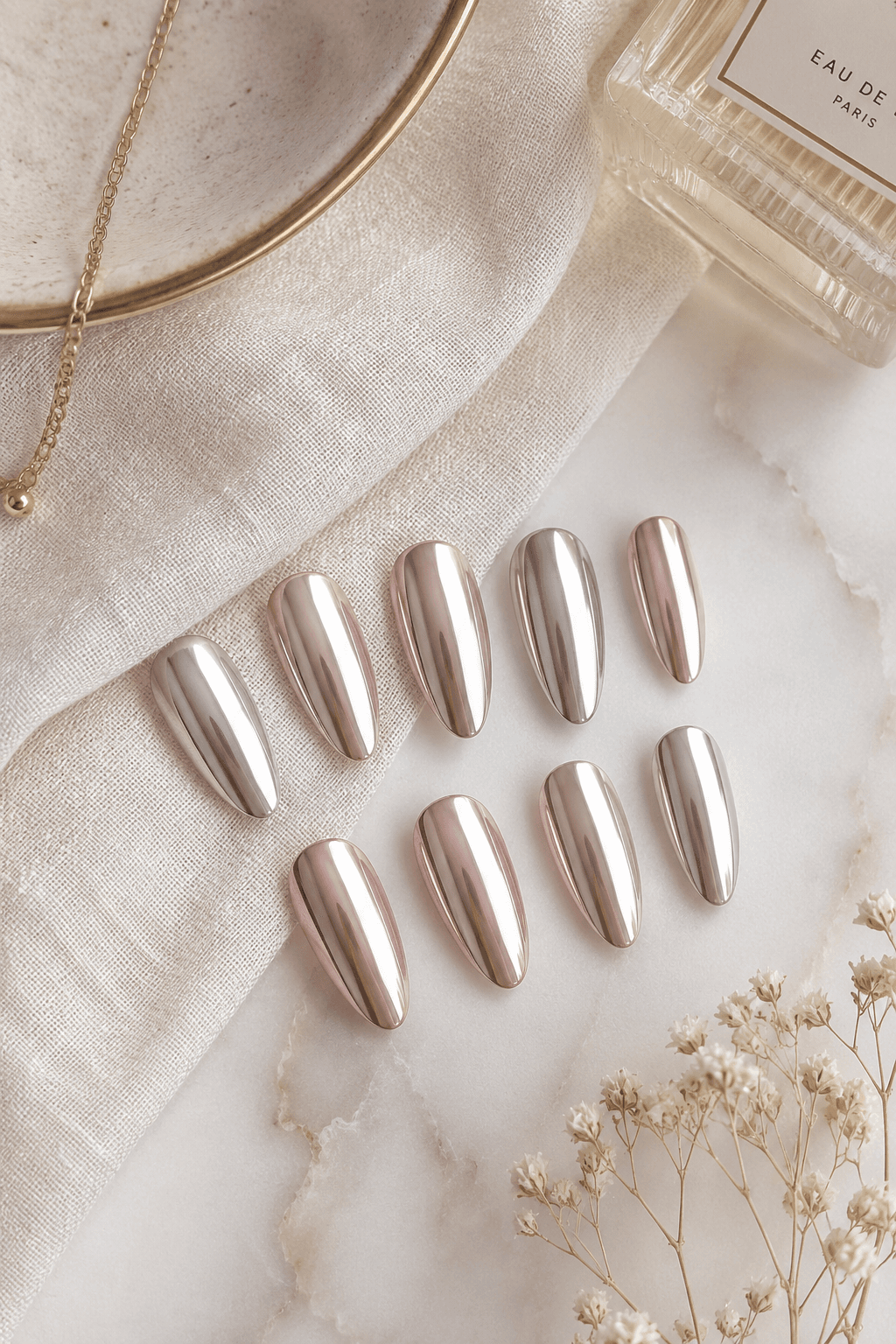
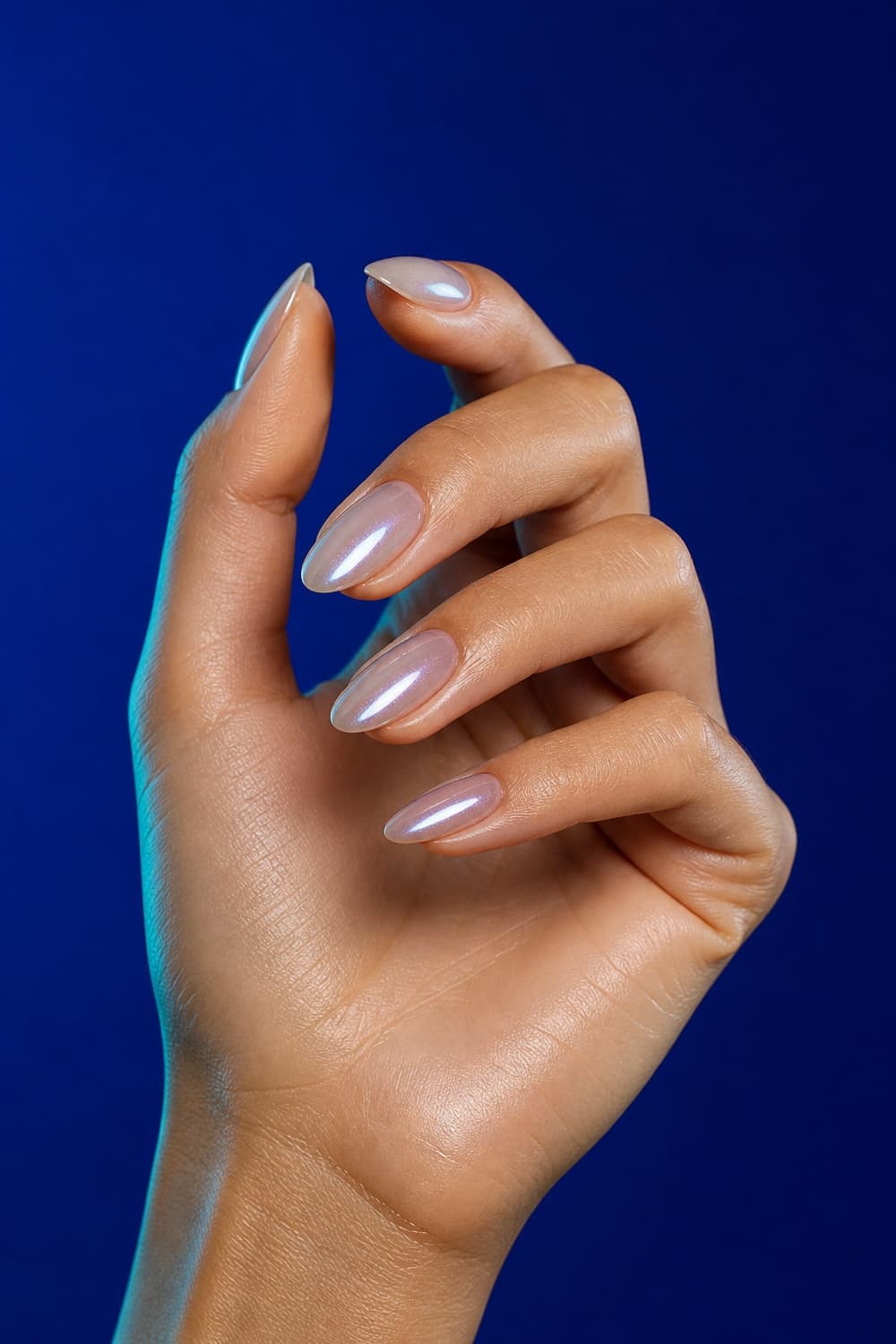
Layer a sheer white or milky pink regular polish with a compatible pearly or high-gloss top coat. Follow both labels rather than mixing uncured gel and regular-polish systems.
FAQs
What are the easiest nail designs to do at home?
Tiny dots, a single stripe near the tip, micro French, and a matte topcoat over any color are all achievable at home with basic tools.
What is the simplest nail design that still looks polished?
A finish change or one dot accent requires less precision than a freehand micro French. Choose a compatible matte, pearl, or glossy top coat, or place one consistent dot over a dry base.
What tools do I need for simple nail art?
For these designs, start with a dotting tool or rounded bobby-pin tip, a fine liner brush or striping tape, regular polish, and compatible base and top coats. French guides can make micro tips easier.
How long do simple nail designs take?
A dot or single accent may add only a few working minutes after the base is dry, while ten French tips or repeated lines take longer. Total time depends on the polish system and its labeled drying or curing steps.
More looks to save
Use these extra references to compare color, shape, and finish before you choose the version to show your nail tech.
Closest matches to compare
Ranked by shared shape, colour, finish, occasion and the preferences stored privately on this device.